
Trying to get your business noticed by people in your town? It can feel like shouting into the void sometimes. Big companies might have huge budgets, but for local businesses, showing up when someone searches for what you offer nearby is what really matters. That’s where local SEO marketing services come in. Think of it as making sure your shop or service pops up right when a potential customer needs it. We’re going to break down the main ways these services help you connect with local customers and grow your business right where you are.
Key Takeaways
- Google Business Profile is super important for local searches. Keeping it updated and accurate helps people find you.
- Making sure your business info is the same everywhere online, like on Yelp or other directories, builds trust and helps search engines.
- Getting good reviews and managing them well shows people you’re a solid choice and boosts your search ranking.
- Making your website work well for local searches, with the right words and info, is key to attracting nearby customers.
- Getting your business to show up in the ‘map pack’ on Google search results is a big win for local visibility.
1. Google Business Profile Optimization
Think of your Google Business Profile (GBP) as your digital storefront on Google. It’s often the very first impression potential customers have of your business when they search for products or services like yours locally. Getting this profile right is a big deal for local SEO.
Making sure your GBP is fully optimized means filling out every single section completely and accurately. This isn’t just about listing your name, address, and phone number (though that’s super important – we call that NAP consistency). It’s about adding your business hours, website link, services offered, and even attributes like ‘wheelchair accessible’ or ‘free Wi-Fi’. Google likes complete profiles, and so do customers looking for details.
Here’s a quick rundown of what goes into a top-notch GBP:
- Accurate NAP Information: Your business name, address, and phone number must be exactly the same across your website, social media, and anywhere else online. Inconsistent details confuse both customers and Google.
- Compelling Business Description: This is your chance to tell people what you do and why they should choose you. Use clear language and naturally include keywords that people might search for when looking for your services in your area.
- High-Quality Photos and Videos: Show off your business! Add pictures of your storefront, your products, your team, and happy customers. Videos can also make your profile more engaging.
- Services and Products: List out everything you offer. Be specific so customers know exactly what you provide.
- Business Hours and Attributes: Keep your hours updated, especially around holidays. Add relevant attributes that highlight what makes your business unique or accessible.
Google uses your GBP to show businesses in local search results and on Google Maps. The more complete and accurate your profile is, the better Google can understand your business and show it to the right people. It’s also a key factor in building trust with potential customers before they even visit your website or call you.
Don’t forget about verification! Google needs to confirm you’re a real business at the listed address. They have a few ways to do this, like a postcard in the mail, a phone call, or sometimes even a video. Getting verified is a necessary step to make sure your profile is fully functional and visible.
2. Local Citation Building
Think of local citations as digital mentions of your business name, address, and phone number (NAP). These aren’t just random listings; they’re important signals to search engines like Google that your business is legitimate and operates in a specific location. When your business information is consistent across various online directories, review sites, and social media platforms, it builds trust and authority.
Consistent and accurate NAP information across multiple platforms is key to local search visibility.
Why bother with citations? Well, they help search engines verify your business details, which directly impacts your ability to show up in local search results, especially in the coveted “map pack.” It’s like telling Google, “Hey, I’m really here, and here’s my info, confirmed by these other places!”
Here’s a breakdown of why this matters:
- Accuracy: Even small errors, like a transposed digit in your phone number or a slightly different street name, can confuse search engines and potential customers.
- Consistency: Your business name, address, and phone number should be identical everywhere. This includes major directories like Yelp, Yellow Pages, and industry-specific sites.
- Relevance: Citations on sites related to your industry or local community carry more weight.
Building these citations isn’t just about getting listed; it’s about strategic placement. You want to be present where your local customers are looking.
The goal is to create a strong, unified online presence that search engines can easily recognize and trust. This digital footprint helps confirm your business’s existence and location, making it easier for local customers to find you when they need your products or services.
3. Review Management
Reviews are like the digital handshake for your business. When potential customers search for services, they often check what others are saying before they even consider visiting your website or giving you a call. Positive reviews build trust and act as powerful social proof, while a lack of them, or too many negative ones, can send people straight to your competitors.
It’s not just about trust, though. Google itself looks at your reviews. The number of reviews you have and their overall quality play a part in where your business shows up in local search results, especially in that coveted Map Pack. So, getting good reviews isn’t just a nice-to-have; it’s a necessary part of showing up when local customers are looking for what you offer.
Here’s a quick look at what goes into good review management:
- Monitoring: Keep an eye on all your review platforms. This means checking Google, Yelp, Facebook, and any other relevant sites regularly.
- Responding: Reply to reviews, both good and bad. A prompt, personalized response shows you care about customer feedback.
- Generating: Actively encourage satisfied customers to leave reviews. This helps boost your overall rating and visibility.
Tools can really help here. Many platforms aggregate reviews from different sites into one place, making it easier to track and respond. Some even offer AI-powered suggestions for replies, which can be a lifesaver when you’re busy. Setting up alerts means you won’t miss a new review, allowing for quicker responses.
When responding, remember to be prompt and personal. Reference specific details from the review if you can. For negative feedback, stay professional and offer a way to discuss the issue offline. This shows you’re committed to customer satisfaction. Managing reviews consistently helps keep your Google Business Profile looking fresh and trustworthy.
4. On-Page SEO
On-page SEO is all about making your website itself as friendly as possible for both search engines and the people who visit it. Think of it as tidying up your shop so customers can easily find what they’re looking for. This means making sure your website’s content, structure, and technical bits are all working together.
The goal is to signal to Google that your page is the best answer for a specific local search query.
Here’s what goes into it:
- Content Relevance: Your website copy should clearly talk about what you do and where you do it. If you’re a plumber in Springfield, you need to mention “Springfield plumbing services” or “emergency plumber Springfield” naturally within your text. This helps search engines understand your business and its location.
- Title Tags and Meta Descriptions: These are the first things people see in search results. Your title tag should include your main keyword and location (e.g., “Best Pizza in Downtown Chicago | Luigi’s Pizzeria”). The meta description is your chance to give a little more detail and encourage clicks.
- Header Tags (H1, H2, etc.): Use these to organize your content. Your H1 should be your main topic, and subsequent headers break down the information logically. This makes it easier for both readers and search engines to scan and understand your page.
- Internal Linking: Connecting different pages on your website helps users discover more of your content and also helps search engines crawl your site more effectively. For example, a blog post about “Spring Lawn Care Tips” could link to your “Spring Lawn Mowing Services” page.
- Mobile-Friendliness: A huge chunk of local searches happen on phones. Your website needs to look good and work well on any screen size. Slow loading times or tricky navigation on mobile can really hurt your rankings.
Making your website easy to understand and use is just as important as having great content. When search engines see that people are spending time on your site and finding what they need, they tend to rank it higher. It’s a win-win for everyone involved.
Optimizing these on-page elements helps search engines understand your business’s services and its geographic focus, which is key for attracting local customers.
5. Map Pack Rankings
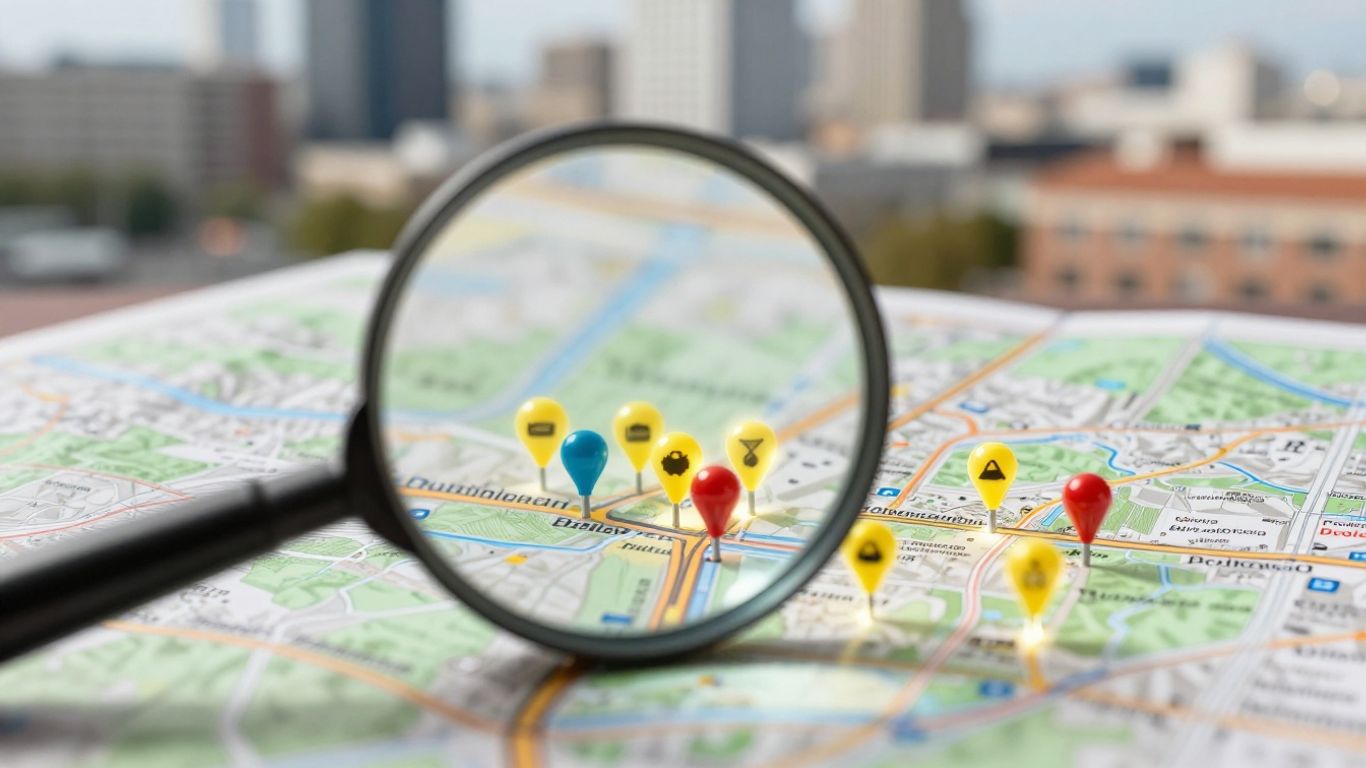
Getting your business to appear in the local 3-pack on Google Maps—what people usually call the “Map Pack”—can be a real game-changer, especially for small and local businesses. These top three map listings catch almost all the clicks when someone searches nearby. It’s like free advertising right above regular search results, and everyone is trying to land one of those spots.
To actually get into the Map Pack, here are a few steps that matter most:
- Keep your Google Business Profile fully updated and accurate.
- Encourage happy customers to leave reviews and reply to them when possible.
- Build local citations—make sure your business shows up the same way on all directories.
- Use location-based keywords on your website.
- Add photos and posts to your profile often.
Here’s a quick table to show what usually affects Map Pack ranking and why it matters:
| Factor | Why It Matters |
|---|---|
| Google Business Details | Helps Google trust your info |
| Reviews & Ratings | Builds trust with customers |
| Local Backlinks | Shows you’re known in the area |
| NAP Consistency | Prevents any confusion |
If you show up in Google’s Map Pack, you’ll almost definitely notice more calls, clicks, and new faces coming in the door. It isn’t easy, but even small tweaks make a difference over time, so it’s worth the effort to keep at it.
6. Local Keyword Research
You know, figuring out what people actually type into Google when they’re looking for a business like yours is pretty important. It’s not just about guessing; it’s about digging in and finding those specific phrases. This is the foundation for making sure your business shows up when local customers need you. Think about it – if you sell “artisanal bread” but everyone in your town searches for “fresh sourdough bakery,” you’re going to miss out.
Local keyword research helps you connect with people who are actively looking for your products or services right in your neighborhood. It’s about understanding the language your potential customers use. Are they looking for “emergency plumber near me,” “best pizza downtown,” or “hair salon open late”? Knowing these terms lets you tailor your website content, your Google Business Profile, and even your ad campaigns to match their searches.
Here’s a quick look at why it matters:
- Better Visibility: When you use the right keywords, search engines can more easily understand what you offer and show your business to the right people.
- More Targeted Traffic: You attract visitors who are genuinely interested in what you do, not just random clicks.
- Competitive Edge: Many businesses don’t do this step well, so getting it right gives you a real advantage.
To get started, you can use tools like Google Keyword Planner or even just look at the “People also ask” section on Google search results. Pay attention to what your competitors are doing too. What terms are they ranking for? What’s in their descriptions?
The goal is to find a mix of broad local terms and very specific, long-tail keywords that describe exactly what you do and where you do it. This way, you’re not just showing up, you’re showing up for the right searches.
For example, if you’re a “dog groomer,” you might find keywords like:
- “dog grooming services [your city]”
- “mobile dog groomer near me”
- “puppy grooming special offers”
- “best dog bath and brush [your neighborhood]”
7. Reputation Management
Your online reputation is a big deal, especially for local businesses. Think of it as your digital storefront – what people see and think about you before they even step inside (or click your website). Managing what people say about your business online is just as important as making sure your doors are open and your lights are on.
Reviews are the main part of this. They’re like recommendations from friends, but for everyone to see. Good reviews build trust, showing potential customers that you’re reliable and do good work. Bad reviews, or no reviews at all, can make people hesitate and look elsewhere. Google notices this too. The star ratings you see in local search results? They’re not just for show; they play a part in where your business shows up.
So, what does managing your reputation actually involve?
- Monitoring Reviews: Keep an eye on what people are saying about you on Google, Yelp, Facebook, and other sites. You need to know what’s being said.
- Responding to Reviews: This is key. Thank people for positive feedback. For negative reviews, respond calmly and professionally. Offer to take the conversation offline to sort out any issues. This shows you care.
- Encouraging New Reviews: Actively ask satisfied customers to leave a review. Make it easy for them by providing a direct link.
Tools can help automate much of this. They can gather reviews in one place and even suggest responses, saving you time while keeping your online image polished. It’s about being present and showing you value customer feedback.
It’s not just about collecting stars; it’s about building a relationship with your customers and showing search engines that your business is active and well-regarded. A strong reputation can really make you stand out from the competition.
8. Local Backlinks

Building local backlinks is not just about gathering links randomly—it’s about connecting with trustworthy businesses, organizations, and news outlets in your area. These local links show search engines that your business is rooted in the community and worth recommending to people nearby.
Here’s why local backlinks matter:
- They give your site more authority in local search results.
- Local links usually bring in people who are actually interested in your service or product.
- You end up getting traffic that’s both relevant and more likely to convert.
Common sources for strong local backlinks include:
- Local news sites or online magazines
- Sponsorships or partnerships with local nonprofits or schools
- Listings in area business directories or industry groups
| Source Type | Trust Level | Potential Impact |
|---|---|---|
| Local news articles | High | Strong |
| Community blogs | Medium-High | Moderate |
| Business directories | Medium | Consistent |
If you’re wondering where to get started, check with local business associations or see if area blogs are open to guest posts. Sometimes, just sponsoring a community event is enough to get your business listed on their website.
For real gains, focus on high-quality backlinks from local sources—like those mentioned in news outlets and business directories. This strategy pays off over time and gives your business a better shot at showing up when locals search for what you offer.
9. SEO Audit
Before you start making changes or investing in new strategies, it’s smart to know exactly where you stand. That’s where an SEO audit comes in. Think of it like a check-up for your website and online presence. It looks at all the different parts that affect how well you show up in search results, especially for local searches.
An audit helps pinpoint what’s working and, more importantly, what’s not. It examines things like:
- Your website’s technical health (is it fast, mobile-friendly, and easy for search engines to crawl?)
- Your on-page elements (are your titles, descriptions, and content using the right words?)
- Your local citations (is your business name, address, and phone number consistent everywhere online?)
- Your Google Business Profile (is it complete, accurate, and active?)
- Your backlink profile (who is linking to your site, and is it good quality?)
- Your current search rankings for important local terms.
The goal is to get a clear picture of your current performance and identify specific, actionable steps to improve. Without this baseline, you might be wasting time and money on the wrong things. It’s the foundation for any successful local SEO campaign.
A good audit doesn’t just point out problems; it suggests solutions. It helps you understand the ‘why’ behind your current rankings and provides a roadmap for improvement, making sure your efforts are focused and effective.
Here’s a quick look at what might be uncovered:
| Area Examined | Potential Issues Found | Impact on Local Search |
|---|---|---|
| Google Business Profile | Incomplete information, incorrect hours, poor photos | Lower visibility in local map results |
| Website Content | Thin or irrelevant content, missing keywords | Difficulty ranking for relevant local searches |
| NAP Consistency | Mismatched Name, Address, Phone details | Reduced trust signals for search engines |
| Mobile Responsiveness | Slow loading or broken layout on phones | Poor user experience, higher bounce rates |
10. Google Maps Integration
For local businesses, Google Maps Integration isn’t just a nice-to-have—it’s become something customers expect. When your business pops up right where your customers are searching, it makes it so much easier for them to visit, call, or just check out what you offer.
Appearing on Google Maps helps physical stores get seen by people who are ready to walk in or make a purchase. If your details are missing or outdated, you could miss out on these opportunities.
A strong Google Maps setup goes beyond simply dropping a pin and hoping for the best. Here are key strategies to get the most out of your Maps presence:
- Double check your business location and address for accuracy—Google will make your listing more prominent when it trusts your details.
- Add categories and business hours, so searchers know when you’re open and what you do.
- Use high-quality photos to give folks a real sense of your storefront or service experience.
- Regularly update your profile with posts, offers, and upcoming events to stay fresh in local search results.
- Track clicks for directions, website visits, and calls coming through Google Maps—these signals show how customers find you.
Being visible in Google Maps isn’t magic, but it does mean more people will notice your business when it counts. Make checking your Maps listing a monthly habit—it’s a simple move that keeps you in front of nearby customers.
If you aren’t managing this already, you’re likely handing valuable foot traffic (and revenue) straight to your competitors. A little regular effort goes a long way here.
Wrapping It Up
So, there you have it. Getting your business seen by people right in your neighborhood isn’t some secret code. It’s about making sure Google knows who you are and what you do for folks nearby. Using the right local SEO services means you’re not just hoping people find you; you’re actively helping them. Whether it’s getting your Google Business Profile sorted, making sure your website talks to local searchers, or managing what people say about you online, it all adds up. Don’t let your competitors grab all the local attention. It’s time to put these strategies to work and watch your business grow right where you are.
Frequently Asked Questions
What exactly is local SEO?
Local SEO is like making sure your business pops up first when people nearby search for things you offer on Google. Think of it as helping local folks find you easily, whether they need a pizza or a plumber.
Why is my Google Business Profile so important?
Your Google Business Profile is super important because it’s often the first thing people see when they search for your business. It shows your location, hours, phone number, and even reviews, making it easy for customers to connect with you.
How often should I update my business information online?
It’s a good idea to check and update your business info, like hours and services, at least once a week. Also, try to respond to customer reviews regularly to show you care.
Can I do local SEO myself?
You can definitely try! But, it takes a lot of time and know-how. Hiring experts can often get you better results, faster, so you can focus on running your business.
What if my business doesn’t have a physical store?
No worries! Local SEO works great for businesses that travel to customers, like plumbers or electricians. We can still help people in your service area find you.
Will local SEO help me show up on Google Maps?
Absolutely! Getting your business to appear on Google Maps, especially in that top local results section, is one of the main goals of local SEO services.